It's a dog's life!
In his classic portrait of the British, How to be an Alien, George Mikes, suggested this summary of English behaviour: "If you go for a walk with a friend, don't say a word for hours; if you go out for a walk with your dog, keep chatting to him."
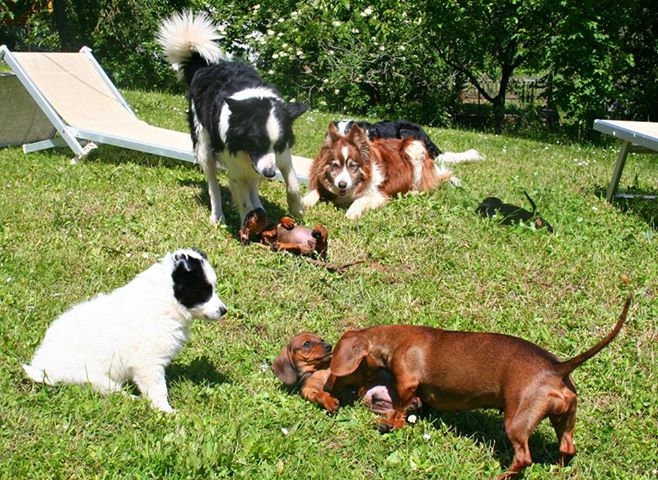
So we all know that in many different languages we will find references to "man's best friend", but the English language does seem to have an especially large variety of idioms involving dogs. Now, as I sit here surrounded by just a few of mine.... I have decided to select some examples from this vast range.
While we all know what the term 'dog' means when referred to an animal, we must remember it can also refer to humans. Note that when it refers to men it is just a substitute word, and not necessarily pejorative: He's a lucky dog! However, if referring to a woman, then it's no compliment at all as it means that she is decidedly unattractive.
In fact, idioms connected with dogs quite often have negative connotations, as in "to go to the dogs", meaning 'to become less successful', e.g. This government is hopeless - the country is going to the dogs!
If you consider that our society is agressively competitive, then you might refer to is as a 'dog-eat-dog world' - though this seems a bit unfair as cannibalism among dogs is apparently no more common than among humans.
A 'hang-dog' is a person that cannot be trusted who, according to the Oxford English Dictionary is “fit only to hang a dog, or to be hanged like one.” But we more often use the expression 'a hangdog look' which suggests a look of guilt or shame, or maybe sadness.
If you are 'sick as a dog' then you are really, unpleasantly sick. Is this because dogs tend to eat all sorts of things and get very ill? Or perhaps they look particularly depressed when they do get sick? In any case it expresses an extreme state, just as being 'dog-tired' means you really are exhausted.
And what about being 'dog-hearted', which means you are cruel and inhuman? So what happened to this idealised relationship between the two species suggested by President Harry S. Truman's line "If you want a friend in Washington, get a dog" or the catchphrase "Love me, love my dog"?
We also refer to doggy items, such as their meals or the place where they live in some idioms:
To be dressed up like a 'dog's dinner' for an English person would mean that you were 'overdressed', i.e. wearing clothes that were excessively formal or elaborate, while an American would mean simply that you were a mess, or equally a 'dog's breakfast'.
If you're 'in the dog-house' then you are in trouble (usually with your wife)...
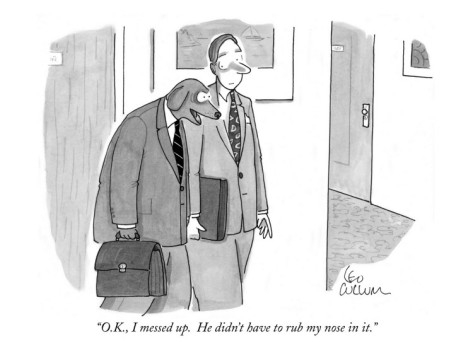
Don't worry if you get confused - we won't 'rub your nose in it' (call your attention to your mistake in an unkind way - a method some people, myself excluded, believe may be successful to stop a dog urinating in the house)!