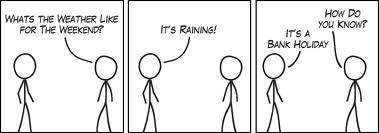
It's a bank holiday
This is a term used for public holidays in the UK and the Republic of Ireland - originally referring to the days when bank workers were given a day off, but now extended to cover other days which were already holidays for the general working population such as Christmas Day and Good Friday (the Friday before Easter).
 If you worked in a bank before 1834 life was pretty easy, as there were roughly 33 religious festivals and saints' days which you could celebrate by staying at home but then came the big cut when these were reduced to four!
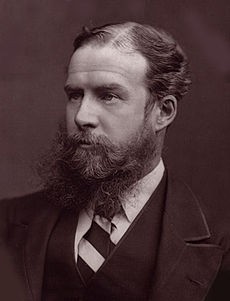
Luckily in 1871 Sir John Lubbock, who was a Liberal politician and banker, but also cultivated an interest in archaeology and natural sciences and was a friend of Darwin, introduced an Act which increased the number of public hoildays thus gaining great popularity among the British public and bringing the bank holidays up to about ten, though the actual days differ according to whether you live in England, Scotland, Wales or Ireland.
All these countries have holidays on Christmas Day, Boxing Day and New Year's Day, but in many places the shops only close on Christmas Day.
The Scots can also stay at home on January 2nd - maybe because the New Year's Eve parties are usually so good!